
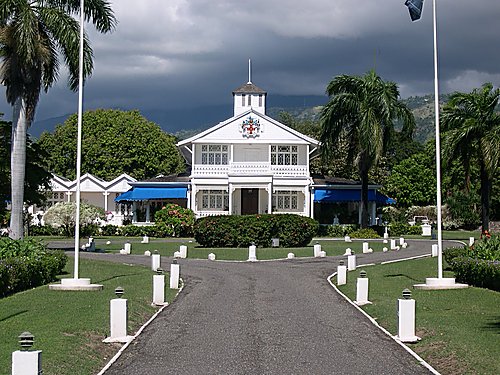
Just over a week ago, the collapse of the Vale Royal portico, on the day of local government elections in Jamaica no less, caused a viral furor on social media. The collapse was beyond embarrassing, in terms of how it reflects on Jamaica’s heritage management and also because of its broader symbolic implications.
Vale Royal is one of the oldest surviving historical buildings in Kingston and St Andrew. Originally known as Prospect Pen, it was established in 1694, just a few years after the Port Royal earthquake. The main building dates from the mid- eighteenth century, although there are modern extensions. The property was acquired by the colonial government in 1928, to serve as the home of the colonial secretary. It was declared a national monument in 1958, when the Jamaica National Trust Commission, the precursor of the Jamaica National Heritage Trust (JNHT), was established. It became the official residence of the prime minister in 1980, when it was also restored, making its maintenance the joint responsibility of the Office of the Prime Minister and the JNHT.
Unlike Havana, San Juan, or Santo Domingo, Kingston does not have a well-preserved historic district, which is the result of its peculiar history, with the devastation of the 1907 earthquake as the main reason. This makes it even more important to preserve what little is left, one would think; but there are differences of opinion on that count, as some dismiss such buildings as unwelcome reminders of an oppressive colonial past. Many such buildings were, indeed, originally owned by slaveholding families and are generally associated with colonial rule, although it should be noted that they were constructed using the labour and craftsmanship of the enslaved. Destroying or willfully neglecting such sites would amount to erasing a foundational part of Jamaica’s history from which we can learn much today.
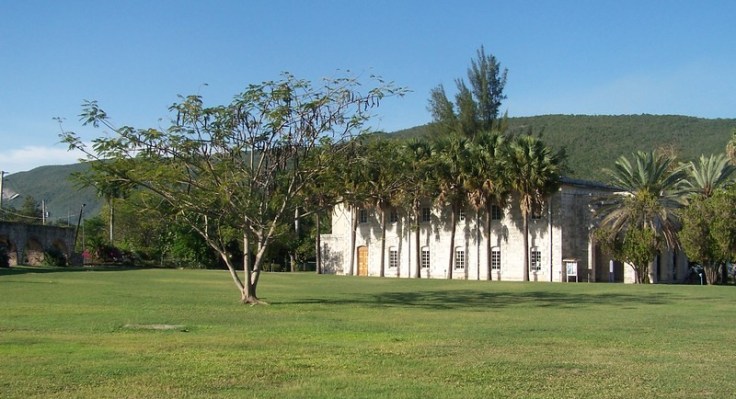
One way to redeem such buildings symbolically, is to put them to beneficial public use to modern Jamaica. The University Chapel at the University of the West Indies Mona campus was once a plantation building on the Gale’s Valley Estate in Trelawny, originally built in 1799 and relocated stone by stone in the late 1950s to become what is now one of the most beautiful and sublimely sited chapels in the West Indies. The university campus, likewise, was constructed on the site of a former sugar plantation but now has a very different, socially constructive role in Jamaican and Caribbean life. A similar case could be made for Vale Royal which was repositioned to become a symbol of Jamaica’s political independence which makes what was allowed to happen there even more troubling.
Vale Royal is no longer used as the prime minister’s residence today and has been falling into disrepair in recent years. Community members, such as the blogger Emma Lewis, have expressed concern about the state of the building from as early as 2020 and the matter was raised in Parliament in 2022 by the opposition MP for the area, Julian Robinson. Inevitably, rumours have been flying on social media that the neglect is deliberate and designed to pave the way for the sale and development of the property.
These rumours should not surprise us since several buildings of historical value have been demolished in Kingston recently to make way for new commercial and residential developments. The former home of the late National Gallery curator David Boxer on Devon Road, once planned to become a private museum, is now the site of a high-rise building under construction. The house built by the Art Deco furniture designer Burnett Webster on Seaview Avenue, which was later owned by the art collector Wallace Campbel and operated as an art gallery, was also unceremoniously demolished, with plans for a commercial complex. Both were buildings of historical and architectural importance and ought to have been preserved. They are in the same general neighborhood as Vale royal, which is being transformed radically by often ill-advised developments, and it is widely recognized that Kingston is in dire need of green and recreational spaces.
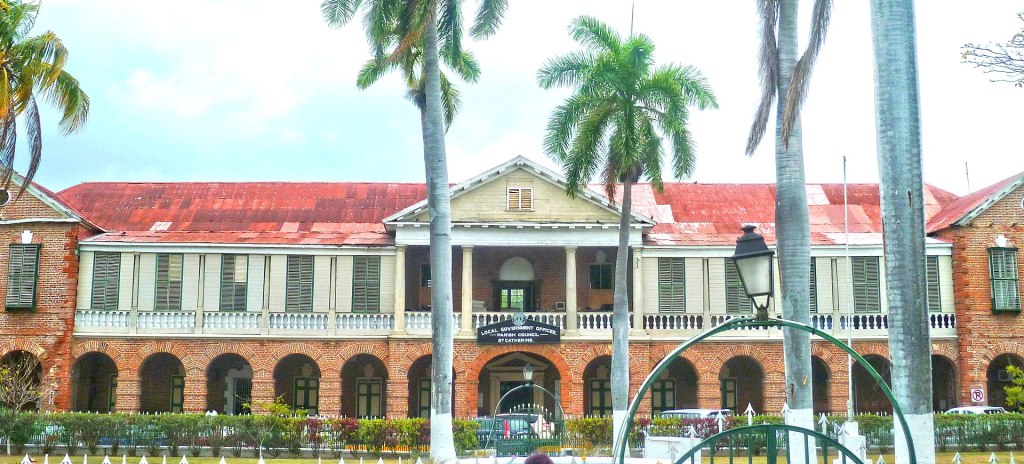
It would be one thing if what has happened to Vale Royal was an isolated instance, but it is part of a broader pattern of neglect of the country’s heritage buildings and sites. The old city centre of Spanish Town has been deteriorating for decades although it has a treasure trove of historical buildings. Emancipation Square is a beautiful and unique Georgian square, but its preservation status is dismal. The Old King’s House burnt in 1925 and only the façade is left standing. The building now looks like a Hollywood film set, with heavy wooden buttresses that support the façade at the back. The courthouse, on the same square, burnt in 1986 and is now merely a brick shell, fenced off but slowly falling to pieces. Nothing has been done to rebuild these two historic buildings, although both could have been salvaged. Of the four main buildings on the square, only two are still in use and largely intact: the Rodney Memorial and National Archives, and the Parish Council building, the old colonial Assembly building, although its heavily patched corrugated metal roof is an eyesore.
Around the corner, Manchester House, another JNHT protected property, was also left to deteriorate, and collapsed some time in 2019 or early 2020, with its bricks now being pilfered and sold to make barbecues. This building was, reportedly, still largely intact in 2016. The Iron Bridge is another historic structure that needs urgent attention. And these are just some of the historical structures in Spanish Town that are being allowed to go to waste.
The old city centre of Spanish Town, one of the oldest surviving urban settlements in the Caribbean, could be a vibrant heritage site. Examples elsewhere in the Caribbean illustrate what can be done with such sites, if there is a clear vision, in a way that benefits the local population and serves as a tourist attraction. The Garrison district in Barbados, a former colonial garrison, is now a UNESCO World Heritage site and the home of the Barbados Museum and Historical Society (as well as the future home of that country’s long-overdue National Gallery, but that is another story). Santo Domingo’s Zona Colonial includes some of the Caribbean’s oldest extant buildings and has also been declared a UNESCO World Heritage site. The district is well preserved and serves as a bustling, pedestrianized city centre that is also the Dominican Republic’s most popular cultural tourism attraction. Restoring historic Spanish Town could be the shot in the arm that this neglected and troubled municipality needs.
I could go on with examples from across the country: the Ward Theatre, with its never-ending restoration; the Kingston railway station; the Morant Bay Courthouse; and the Mandeville Courthouse are just some of them. The Prime Minister told us in 2022, when challenged on the subject, that the government was reviewing proposals for a new use for Vale Royal, which included a possible museum function, and the impression was given then that this was being actively worked on. It, however, took until part of the building collapsed last week, with the worst possible political timing, before some hasty repairs started. This tells us that the approach to such things is reactive and crisis-driven, rather than planned. Likely, there will now be a flurry of grand announcements to reassure the public that Jamaica’s heritage management is in competent and diligent hands. In fact, I got word while writing this article that the restoration of the Morant Bay Courthouse, to become a museum, will now be funded by CHASE, which is of course wonderful news. But announcements and a piecemeal approach will not solve the bigger problem. What is needed is a frank general assessment of the situation and a feasible plan for the management of Jamaica’s built heritage, with clear priorities and timelines, and a greater sense of who is responsible and where the funding is to come from.
All of this, of course, reflects poorly on the JNHT as the institution charged with the preservation of the country’s historical sites and monuments. The JNHT Act has provisions for fines, and even imprisonment, for those who destroy or damage declared sites and structures. But we must ask whether the JNHT is equipped and empowered to intervene, in case of infractions, or has become an ailing paper tiger. Not so long ago, its principals were specialist technocrats who participated actively and with professional autonomy in the national debates about heritage and culture. Without disrespect to the people now involved, I do not even know who is in charge today. This, too, speaks to a broader problem that has contributed to the neglect of heritage sites: the deterioration and politicization of Jamaica’s cultural institutions, where there no longer seems to be any professional autonomy or guiding vision, and where the funding support and specialist human resources needed to carry out core functions are sadly lacking. That, too, needs to be recognized and addressed.

This article was originally published in the Monitor Tribune of March 10, 2024. It is reproduced here with a few minor changes.
 Perspectives